Image Info
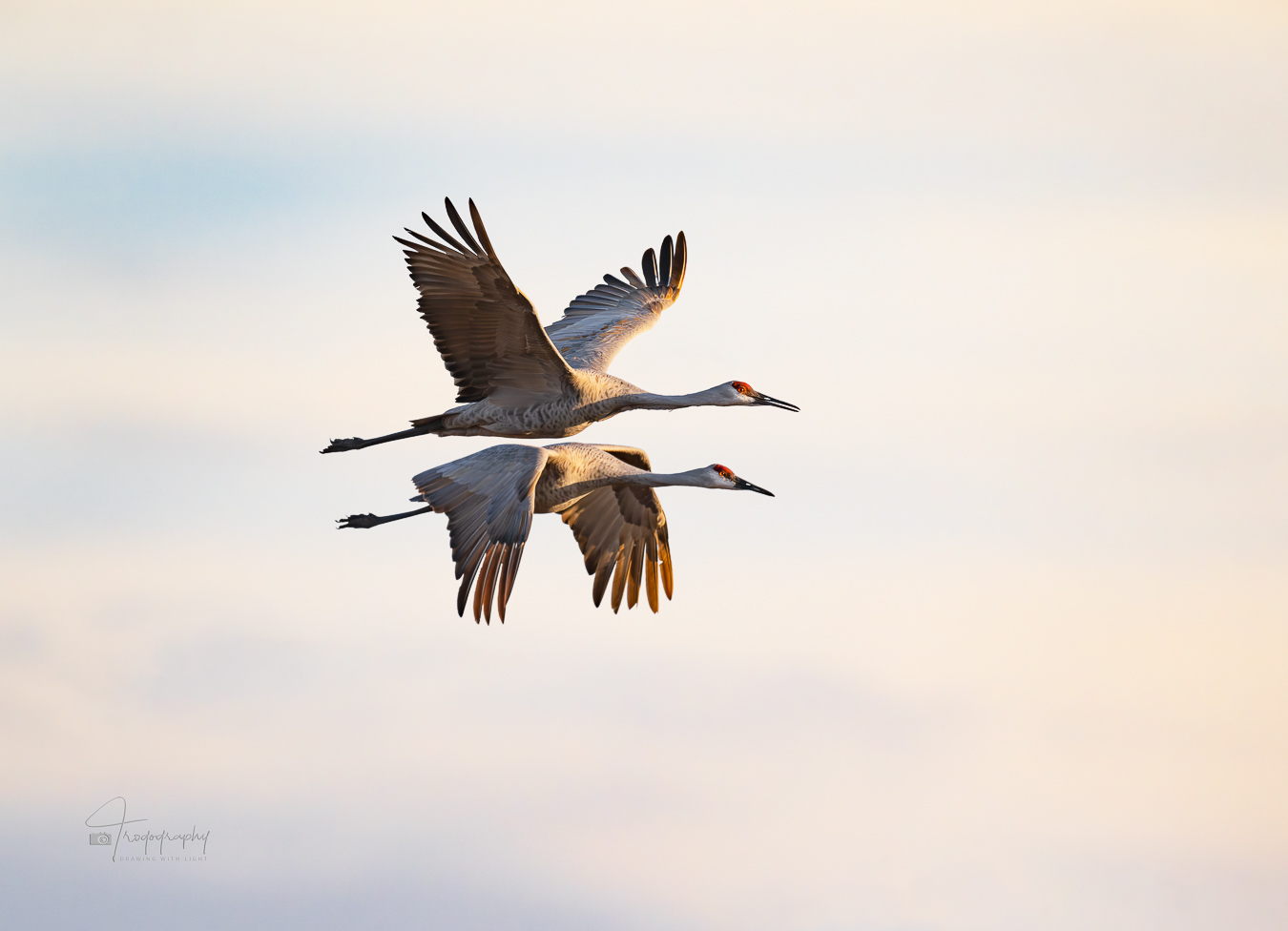
Flying Back to the Roost
The fall migration of Sandhill Cranes is one of my favorite autumn happenings, and hearing the calls from hundreds and thousands of them as they fly high above to the south and southeast is a sure sign that winter is not far away.
Northern Illinois sits directly in the migratory path—and staging area—of Sandhill Cranes during both spring and fall migration. Migration maps will highlight several key stopover sites, though one notable location appears understated: the Jasper-Pulaski Fish & Wildlife Area in northwest Indiana.
According to the Indiana DNR, nearly 33,000 Sandhill Cranes were counted at Jasper-Pulaski on November 28, 2023—an impressive gathering by any measure. Many birders and photographers from Illinois make the drive east each fall to witness this remarkable concentration of cranes.
There is also another, unofficial stopover in southern Wisconsin. Once the corn and crops are harvested in late October through mid-November, several thousand cranes gather in open farmland before flying to their roosting areas at dusk. Watching wave after wave arrive—sometimes 20 birds, sometimes over 100—each group appearing just minutes after the last, is an unforgettable experience. Nature never fails to amaze.
Migration Through Deep Time
Sandhill Cranes are among the most ancient of living bird species. The earliest known Sandhill Crane fossil, estimated to be around 2.5 million years old, was unearthed in Florida, underscoring just how long these birds have followed their seasonal rhythms across the continent. (Source: All About Birds)
Explore a curated collection of nature and wildlife photographs available as fine art prints in the Fine Art Print Store.
Related posts
Featured Fine Art Prints