Image Info
A Beautiful and Rare Occasion
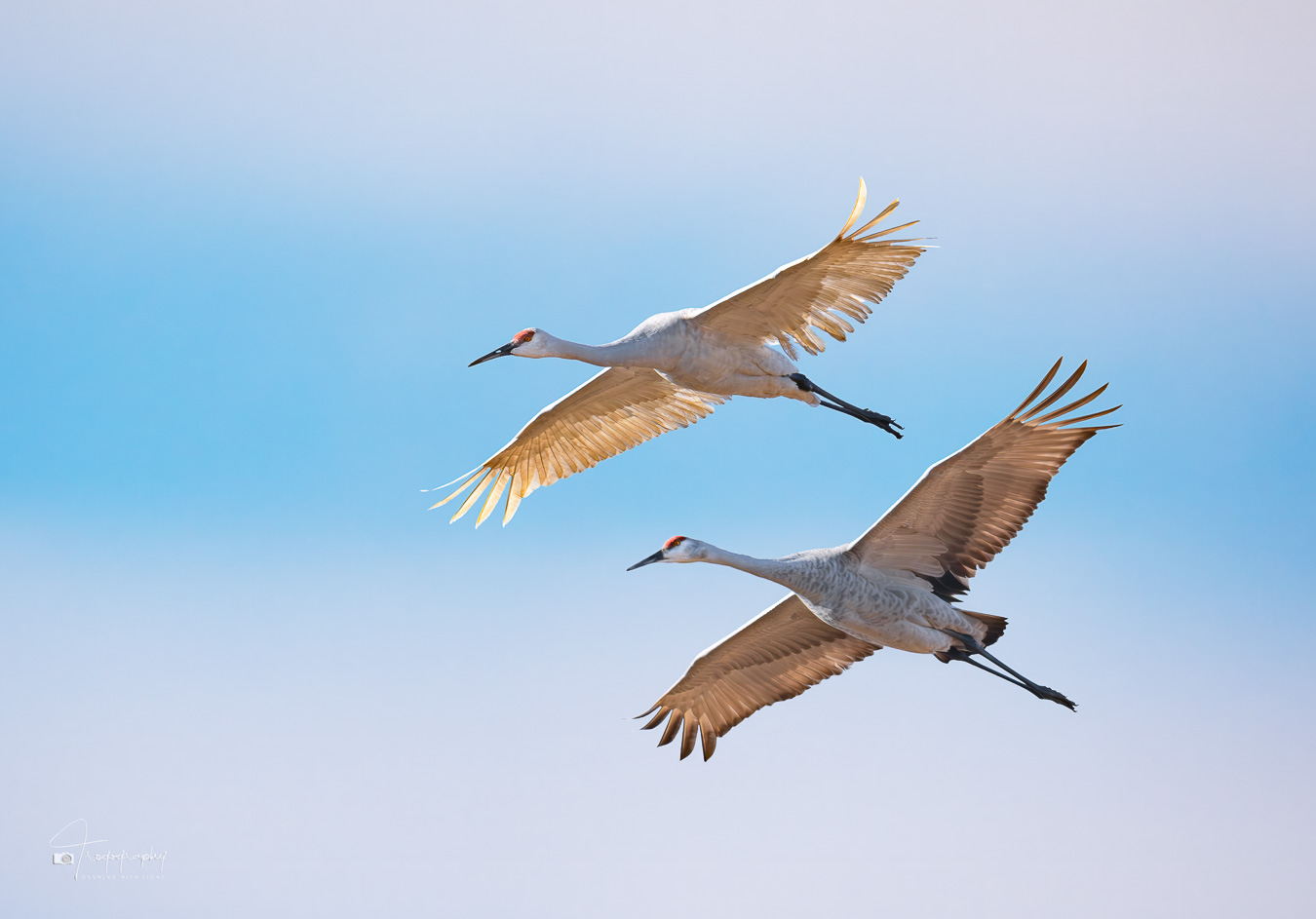
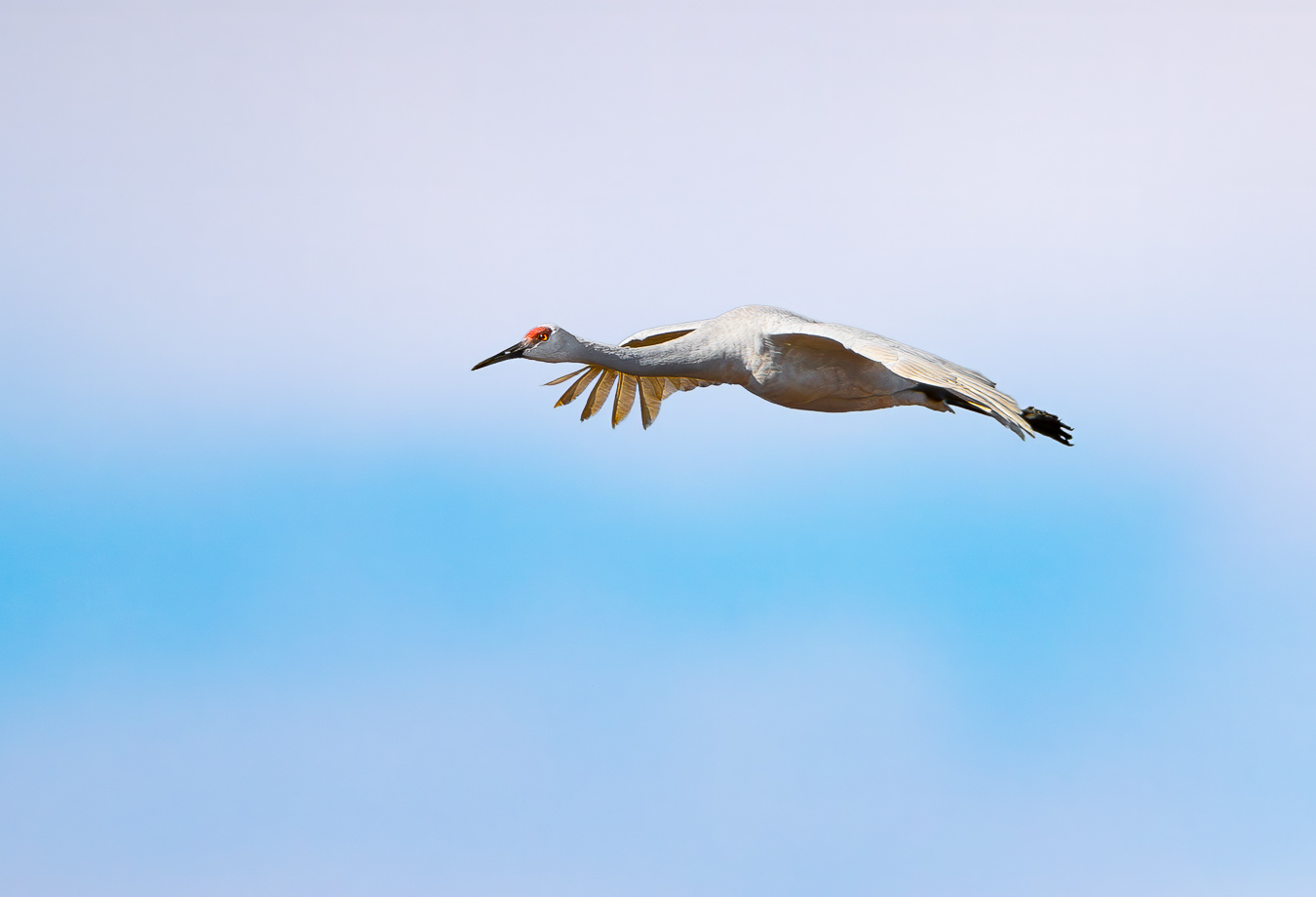
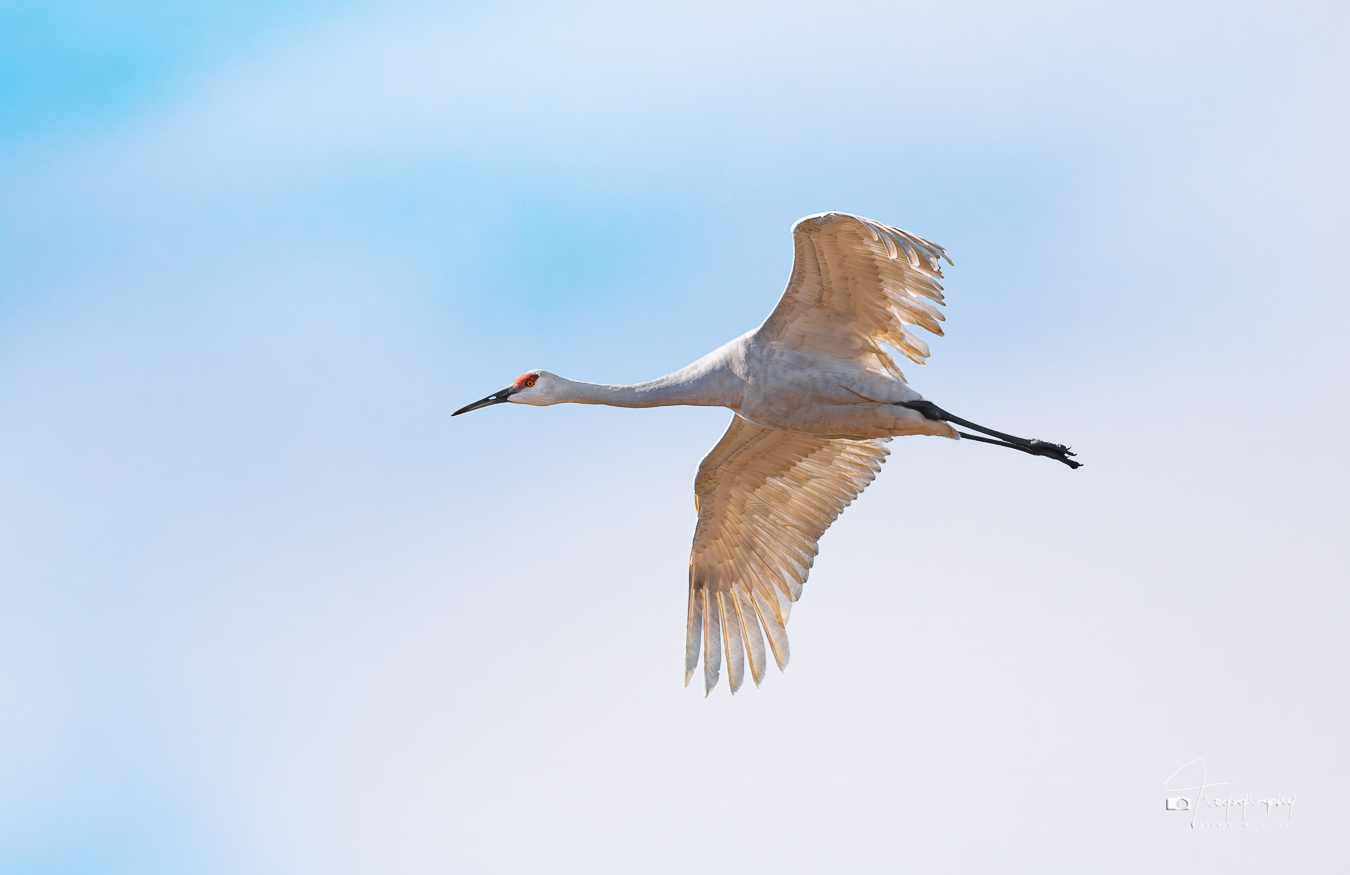
It was fall in southern Wisconsin, and waves of Sandhill Cranes were arriving from the northwest—fifty to a hundred birds at a time—and one individual immediately drew my attention. As the flock circled the marsh and the late light caught its wings, this crane appeared strikingly pale, its plumage glowing against the darker forms around it.
For a brief moment I wondered if I was seeing something rare: a Whooping Crane. But there was no black at the tips of the wings. Could it have been a Trumpeter Swan? Everything was happening quickly, and my focus was split between composition and capturing the moment. By the time the bird descended, it settled beyond a dense wall of reeds and cattails, making further observation on the ground impossible given the terrain and my position.
It wasn’t until I returned home and began reviewing the images that the identity became clear—a leucistic Sandhill Crane.
Leucism is a genetic condition that causes a partial or complete loss of pigmentation, resulting in unusually pale or white plumage. Unlike albinism, it does not affect eye color. While exact statistics for leucistic Sandhill Cranes do not exist, research on abnormal coloration in wild birds suggests such individuals typically occur at a rate closer to one bird in tens of thousands. Applying that understanding to the global Sandhill Crane population suggests that only a handful to perhaps a few dozen leucistic individuals may exist worldwide at any given time.
That rarity places this sighting firmly in the realm of exceptional—not impossible, but genuinely special. It was a fleeting moment, brief and almost unreal, yet unforgettable.
Encounters like this remind us that nature still holds surprises, even in the most familiar migrations. And if you ever find yourself fortunate enough to witness a leucistic Sandhill Crane in the wild, take a moment to pause—it is a gift of rarity and beauty that few will ever experience.
About Leucism in Birds
Leucism occurs when pigment-producing cells fail to develop or migrate properly, resulting in white or pale patches on feathers or, in rare cases, nearly complete loss of coloration. Unlike albinism, leucistic birds typically retain normal eye color. (Source: BTO.org)
Some of these moments eventually find their way into the Fine Art Print Store, where a curated selection of wildlife and nature prints is available.
Related posts
Featured Fine Art Prints